
Zero Conference Insights: Navigating Geopolitics, Energy Transition and the Future of Maritime
Our colleague and Cluster Director, Martin Hennum, recently joined the Zero Conference, where leading industry experts shared impactful keynotes.
The discussions highlighted just how global and interconnected the maritime industry is, shaped by geopolitics, energy transitions, and the choices we make here at home.
Cluster Director, Martin
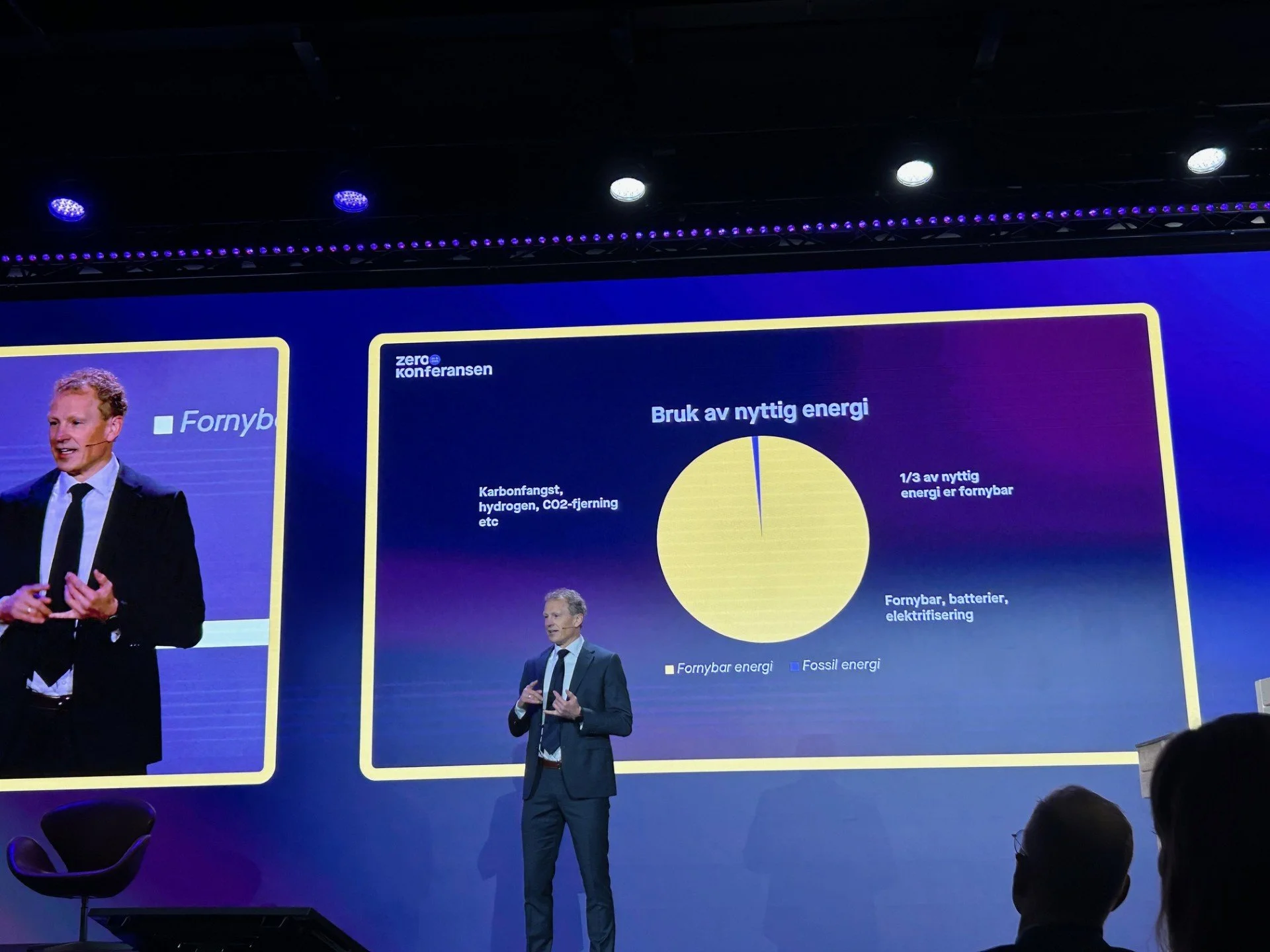

Top insights from the day
As the Zero Conference celebrates its 20th anniversary this year, one thing is clear: geopolitics is shifting offshore, and the bond between climate and security has never been more profound. During the morning’s first panel, Elise Caspersen from Zero emphasized that dialogue between nations has never been more important, especially as consensus-based approaches are challenged and the EU emerges as a more crucial partner than the IMO. At the same time, China represents both considerable potential as well as some challenges regarding technology and security.
For the maritime sector, the pause in IMO agreements was seen as disappointing, but Norway’s commitment to the Zero agreement could become a competitive advantage. Ships built today will last for decades, and they must be designed for zero emissions. With 70 % of the global fleet planned to go green, the challenge remains cost and the need for strong regulatory frameworks. Decarbonization will depend on technology, infrastructure, finance, and clear incentives.
The energy transition was described as “The Age of Electricity” - the fastest shift in history. While AI is energy-intensive, it was also highlighted as a superpower for accelerating climate solutions, particularly in industries like hydrogen, ammonia, and maritime. Yet grid capacity and access to renewable energy remain the biggest bottlenecks. Hydrogen and CCS will most likely be essential pieces of the puzzle.
Finance and investment were also front and center. The Oil Fund was even described as a “2 trillion dollar handbrake”, with mandates not aligned to today’s climate challenges. Massive investments in renewable infrastructure are needed, and institutional investors must rebalance toward new markets if we are to succeed.
Business leaders were reminded that nearly half believe their current models are not sustainable. Innovation must go hand in hand with emissions cuts, strengthened R&D, and public-private collaboration. Market forces will ultimately drive the technological shift, but only if the right conditions are in place. Transport and mobility are already changing rapidly, with EVs making up 25 % of global sales and electrification of short-sea shipping expected by 2050.
Nevertheless, the political message was clear: bold leadership is needed from politicians, business, and civil society alike. Predictability is key, and sustainability is now part of security policy. Norway must strengthen its EU track, develop a national strategy for ports and infrastructure, and act now rather than pause. Ports themselves are critical, requiring dual-use coordination between civil and military needs, standardization of charging infrastructure, and possible strategic partnerships with countries like the UK and Germany.
The overarching message was sobering but realistic: the 1.5°C target is likely lost, and transformation will be met with resistance and happen in waves. Yet small countries can still punch above their weight if they connect climate, security, and industry. The advice was not to panic, but to stay focused on long-term goals and ensure that Norway’s maritime cluster continues to play a leading role in shaping the future.
Looking ahead, it will be exciting to see how Norway addresses critial questions around grid capacity, how AI can accelerate industries like hydrogen, ammonia, and maritime, and how increased security and preparedness can be closely linked to the green transition. At the same time, Norway has emerged as a leader in advancing zero‑emission construction machinery, using pilot projects, public procurement requirements, and targeted support schemes to drive adoption and build practical experience that can guide other European countries.
We are convinced that transforming the maritime sector requires bold investments in technology and infrastructure solutions that not only serve the needs of today’s shipping but also anticipate the demands of 2050 and beyond. Much of this progress is happening outside Norway, and there is a real risk of falling behind unless we fully leverage the expertise of our strong maritime cluster.

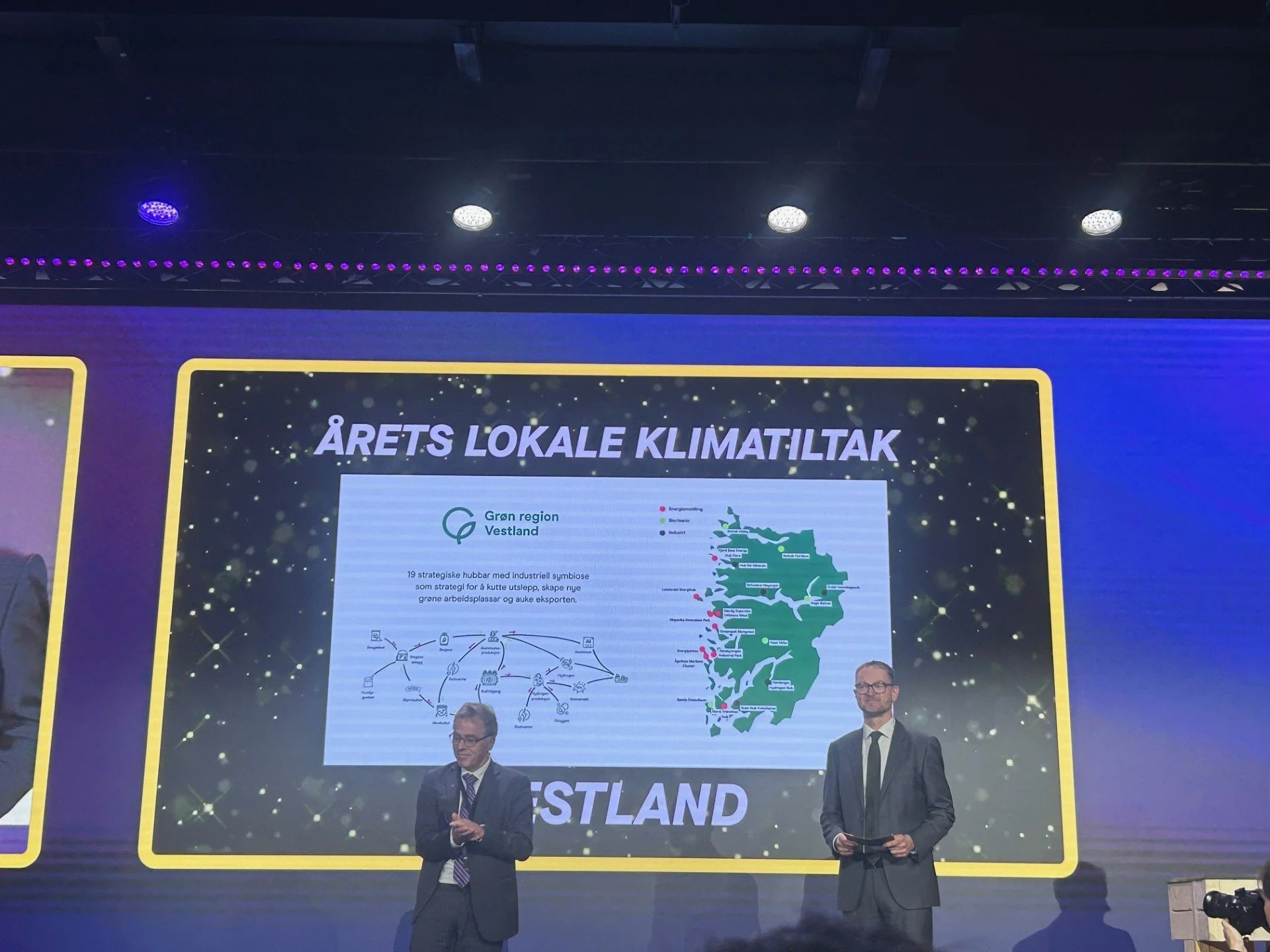
The Local Climate Action of the Year award went to Vestland County. Photo: Kevin Dahlman / ZERO, published on ZERO’s website.
Against this backdrop, we are pleased to share that Vestland County has won the 2025 Local Climate Action Award for large regions with its “Green Region Vestland” project, which is creating 19 hubs to drive the green transition. The award highlights effective local climate measures and aims to inspire broader action across Norway. In the same category, Oslo Municipality and Drammen Municipality were also nominated.
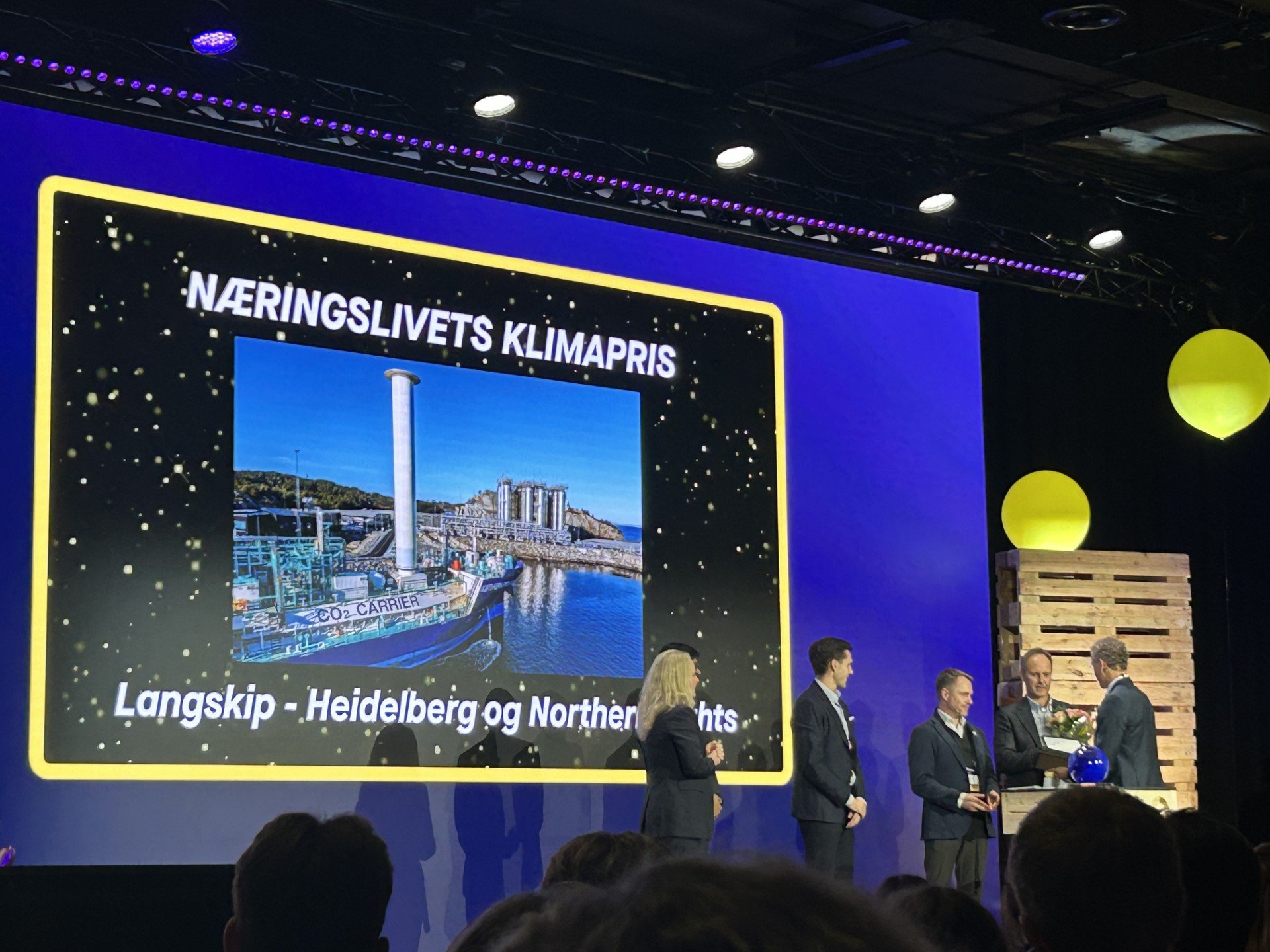
Langskip receiving the Business Climate Award.
Additionally, Langskip won the 2025 Business Climate Award for developing Europe’s first full value chain for carbon capture, transport, and permanent storage, marking Norway’s largest single emissions reduction project. The project is a collaboration between Heidelberg Materials (capture in Brevik), Hafslund Celsio (capture at Klemetsrud), and Northern Lights (transport and storage), and is supported by the government.
An honorary award was also given to the CCS pioneer Per Brevik for his decade-long leadership in realizing carbon capture at Heidelberg’s Brevik cement plant. Other strong nominees included ASKO Oslo and Hafslund.
Read the Zero-report here on policy insights and recommendations for cleaner construction machines in Europe.