
Sofira Maritime Innovation joins Ocean Hyway Cluster
Photo: Sofira Maritime Innovation
Ocean Hyway Cluster is pleased to welcome Sofira Maritime Innovation, based in Haugesund, as one of our newest members. The company, led by Founder and CEO Veronica Haugan, brings a strong commitment to maritime safety, innovation, and sustainability - values that align closely with our own mission to accelerate the green transition at sea.
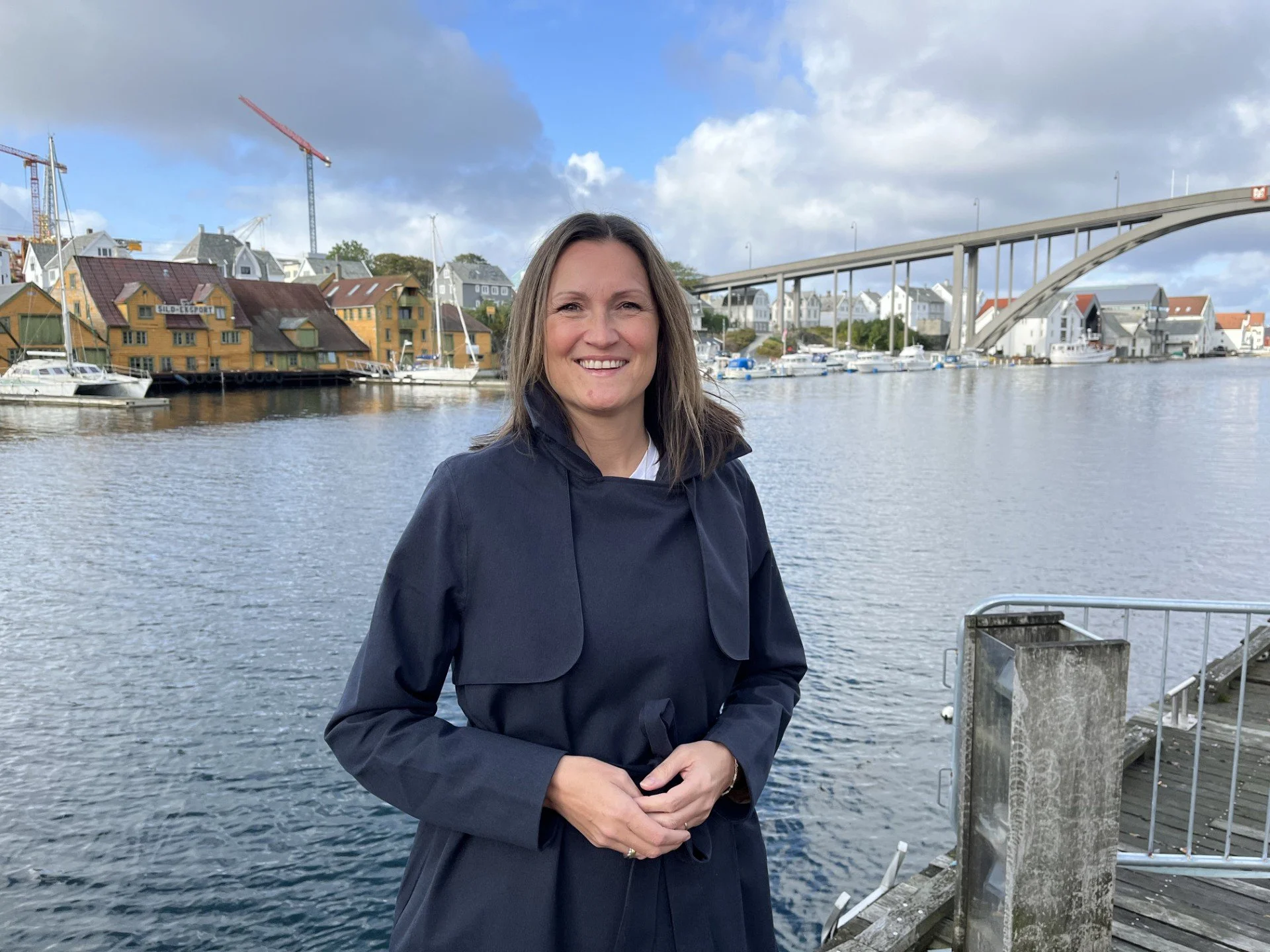
Veronica Haugan, founder and CEO at Sofira Maritime Innovation
A vision for a safer, greener, and more innovative maritime sector
Sofira Maritime Innovation was established in 2025 with a clear vision: to help shape a maritime sector that combines safety, innovation, and environmental responsibility, and that takes a leading role in the global energy transition. The company aims to be an independent, trusted advisor for maritime stakeholders navigating the shift toward greener and more technologically advanced solutions.
Their work spans regulatory guidance, technology advisory, project management, and competence development - always with the goal of making complex frameworks understandable and helping customers implement new solutions safely, profitably, and sustainably.
Right now, the company’s primary focus is a comprehensive mapping of where the maritime industry stands today in terms of future-oriented solutions, what stakeholders see as realistic pathways forward, and which bottlenecks are slowing progress.
“Our goal is to help shipowners, ports, shipyards, regional and local authorities, and technology providers adopt new solutions in a safe, profitable, and sustainable way. We aim to make complex regulations understandable, bridge the gap between technology and practical implementation, and create value for our customers through holistic project management, regulatory advisory, technology guidance, and competence development.” - Veronica Haugan.
Opportunities in a rapidly changing market
The maritime industry is undergoing a profound transformation driven by stricter climate requirements, international regulations, and rapid technological development. While the market is expected to grow significantly toward 2030-2035, many actors face uncertainty related to technology choices, regulatory processes, and risk.
Veronica highlights that maritime innovation increasingly happens through networks, clusters, and partnerships, rather than traditional sales channels. Projects are complex and involve a wide range of stakeholders -from ports and shipowners to technology suppliers, research institutions, authorities, and classification societies.
“For our customers, the path from idea to implemented solution is both demanding and risk‑filled. Success depends on coordination, regulatory understanding, and the ability to build trust between stakeholders - and this is where we believe Sofira Maritime Innovation can make a positive difference.” - Veronica Haugan.
Sofira Maritime Innovation sees strong potential in helping actors navigate this landscape by offering services that address resource shortages, competence gaps, and the need for coordination and trust-building. At the same time, the company notes that the market is still emerging, making visibility and presence essential as the industry moves toward expected growth in the coming decade.
Sustainability at the core
For Sofira Maritime Innovation, sustainability is not a separate initiative - it is embedded in every service they offer. Their contribution is to help the maritime sector meet today’s needs without compromising the ability of future generations to meet theirs.
Current projects
Sofira Maritime Innovation is currently working on several initiatives, with one major project taking center stage: “Realism in Maritime Energy Transition”.
This independent project examines what it truly takes to implement maritime energy transition in practice - not just in ambition. While technology is important, the project highlights that the real bottlenecks often lie elsewhere: limited infrastructure, insufficient competence, high risk, unclear regulatory processes, and weak investment incentives.
Through structured dialogue with shipowners, ports, suppliers, energy companies, and authorities, the project maps:
Which energy carriers and propulsion systems the industry considers realistic
How expectations vary across segments and time horizons
What practical constraints-resources, infrastructure, decision logic-affect implementation
Which “show-stoppers” are delaying or halting projects
The goal is to provide a balanced, evidence-based foundation for better prioritization, more targeted measures, and increased execution capability across the maritime sector.
Rather than pointing to a single “right” solution, the project aims to support smarter decisions and more realistic pathways forward.
Why Ocean Hyway Cluster?
The decision to join Ocean Hyway Cluster was a natural one. The cluster encompasses all of Sofira Maritime Innovation’s core areas, and collaboration is seen as a key driver for maritime energy transition. Veronica emphasizes that major forward‑looking projects often emerge from strong partnerships, and the company is eager to contribute to and benefit from this collaborative environment.
Ocean Hyway Cluster is excited to have Sofira Maritime Innovation on board. Their expertise, analytical approach, and commitment to practical, sustainable progress will be a valuable addition to our community. We look forward to collaborating on the journey toward a more resilient and future-ready maritime industry.

Dimana S. B. Helle